Water heater replacement cost depends on the type of system, unit size, fuel source, installation complexity, and whether extra plumbing, venting, electrical, or code updates are needed. A simple tank-style replacement may be faster and less complex, while a tankless water heater replacement can take longer if the home needs upgrades to gas lines, venting, electrical connections, or water lines.
That is the quick answer.
If your water heater is leaking, no longer producing enough hot water, making loud noises, showing rust, or needing frequent repairs, replacement may be the better long-term choice. Water heating also accounts for about 18% of home energy use, so an old or inefficient unit can affect monthly utility costs too.
For New Hampshire homeowners and businesses, Mountain Plumbing provides water heater replacement and installation for traditional gas, electric, and tank-style systems, as well as tankless water heater replacement for homes that use on-demand hot water.
Quick Answer: How Much Does It Cost to Replace a Water Heater?
The cost to replace a water heater varies because every home and system is different.
A straightforward water heater swap is usually less complex than changing from a tank system to a tankless unit. Tankless systems can be efficient and space-saving, but proper installation depends on fuel type, climate, local building code requirements, and safety factors, especially for gas-fired units. The Department of Energy recommends using a qualified plumbing and heating contractor for tankless water heater installation.
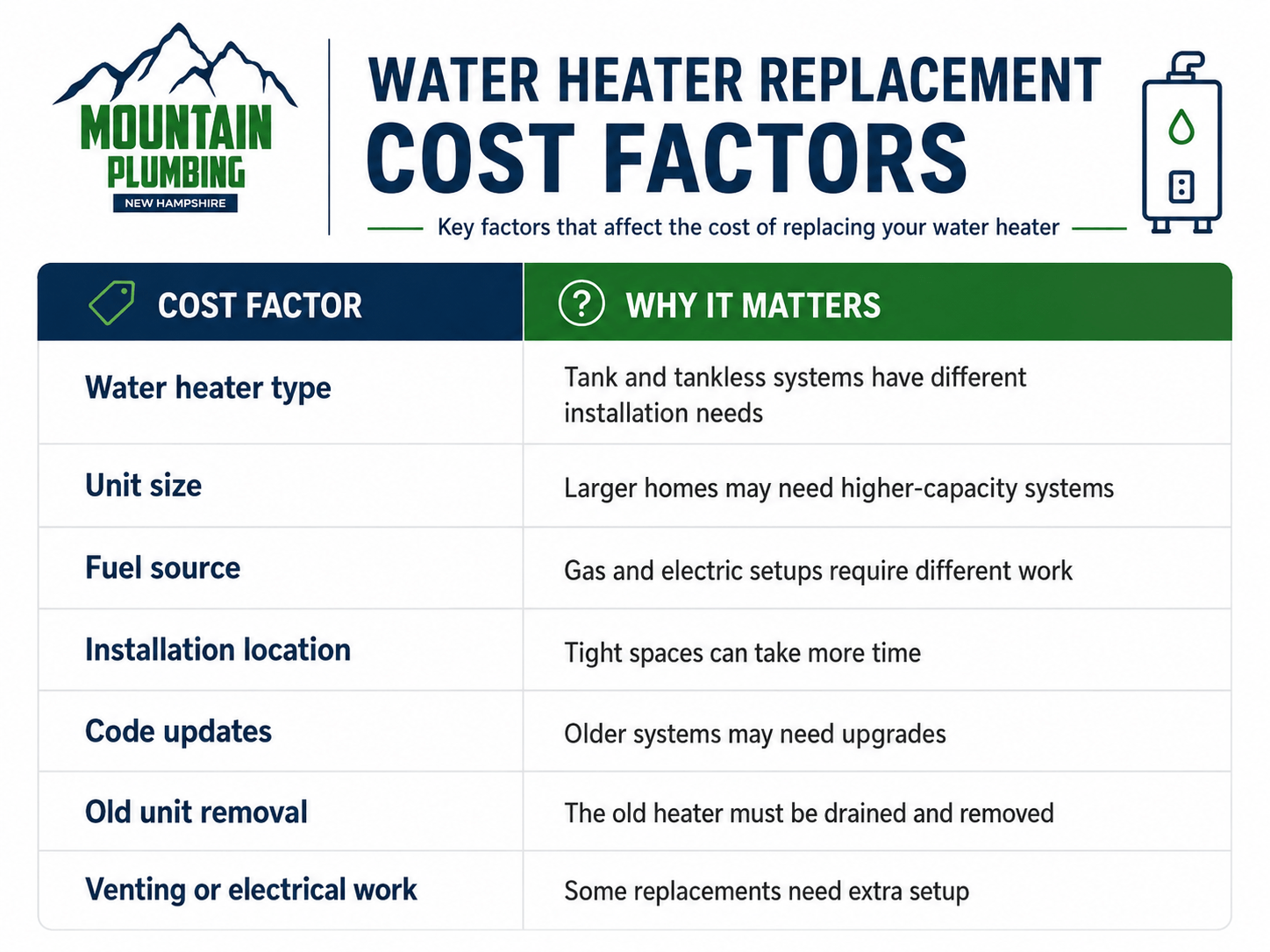
Water Heater Replacement Cost Factors
There is no single cost that applies to every water heater replacement. The best way to get accurate pricing is to have the system inspected.
Here are the biggest factors that affect cost.
Type of Water Heater
Traditional tank water heaters and tankless water heaters have different installation requirements.
A tank water heater stores hot water in a tank. A tankless water heater heats water on demand.
Tankless systems may require additional work, especially if the home is being converted from a tank-style system.
Fuel Source
Water heaters may use electricity, natural gas, propane, or oil-related heating systems, depending on the property.
Gas and propane units may require venting and gas line work. Electric units may require the correct electrical capacity and safe wiring.
Unit Size
A larger household or business may need a larger water heater or a system that can handle higher hot water demand.
An undersized unit may run out of hot water too quickly. An oversized unit may cost more than needed.
Installation Location
A water heater in an open basement may be easier to replace than one in a tight closet, crawl space, attic, or utility room.
Hard-to-access spaces can increase labour time and complexity.
Code Updates
Older water heater installations may not meet current requirements.
A replacement may require updates such as:
- Expansion tank
- Drip pan
- Venting changes
- Shutoff valve updates
- Water line modifications
- Electrical or gas connection updates
- Temperature and pressure relief line corrections
Old Unit Removal
The old water heater usually needs to be drained, disconnected, removed, and disposed of properly.
Large or heavy units can take more time, especially if they are located in a basement or tight space.
When Should You Replace a Water Heater?
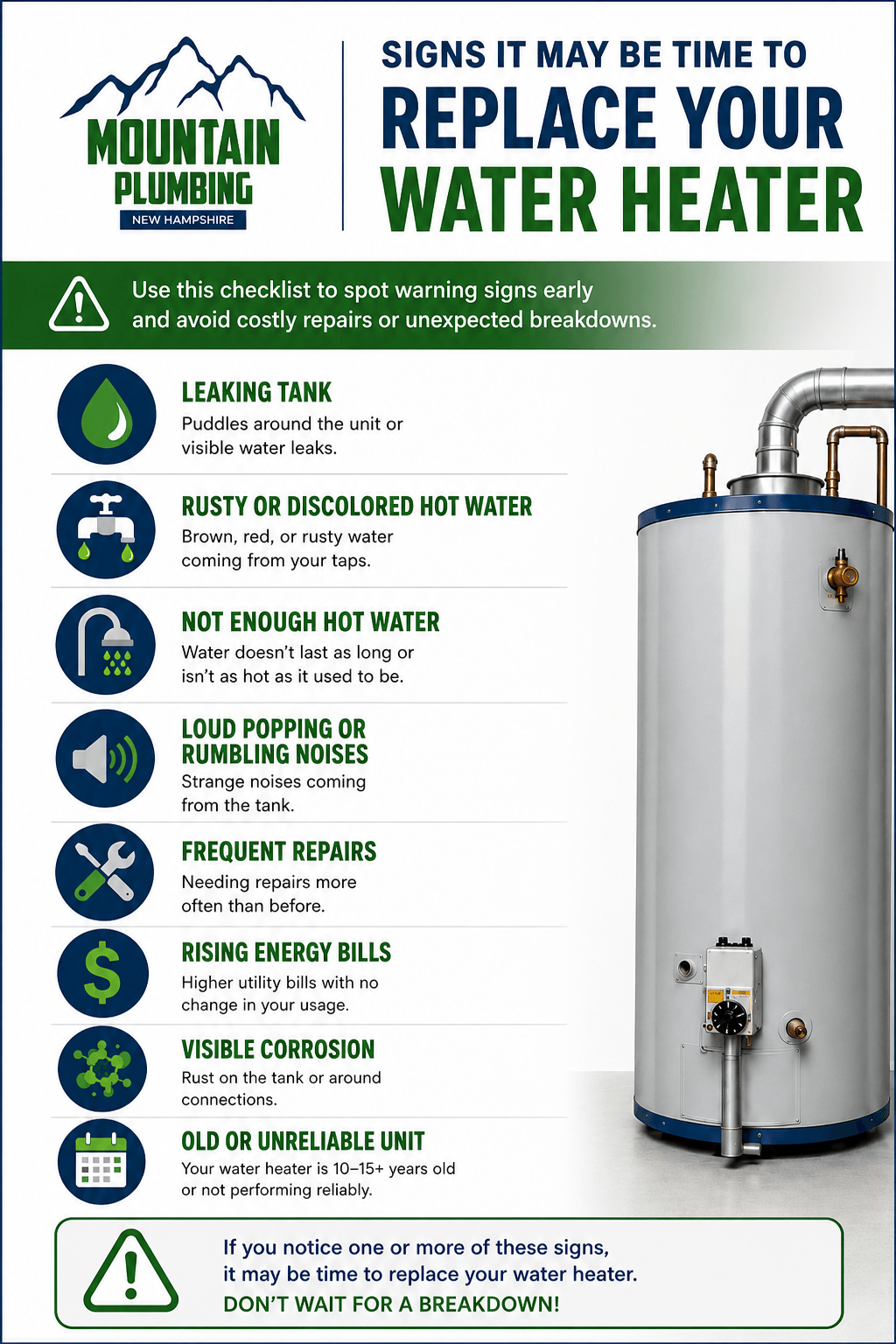
You should consider replacing your water heater when it is old, leaking, unreliable, inefficient, or no longer meeting your hot water needs.
Here are the most common signs.
Your Water Heater Is Leaking
A leaking water heater is one of the clearest signs that replacement may be needed.
Leaks can come from valves, fittings, or pipe connections. Those may be repairable. But if the tank itself is leaking, replacement is usually the safer option.
A leaking tank may mean internal corrosion has weakened the system.
You Keep Running Out of Hot Water
If your hot water runs out faster than it used to, the system may be too small, worn out, full of sediment, or losing efficiency.
This can be frustrating for larger households, multi-bathroom homes, and properties with high hot water demand.
The Water Looks Rusty or Discoloured
Rusty hot water can point to corrosion inside the tank or plumbing system.
If the rusty water only appears from the hot side, the water heater may be the source.
The Unit Makes Loud Noises
Popping, rumbling, or banging sounds can be linked to sediment buildup inside the tank.
Sediment can make the unit work harder and may reduce performance over time.
Repairs Are Becoming Frequent
One repair may be worth it. Several repairs in a short period may signal that the water heater is nearing the end of its useful life.
At some point, replacement can be more practical than continuing to pay for repeated repairs.
Energy Bills Are Rising
Older water heaters may use more energy to produce the same amount of hot water.
Since water heating is commonly one of the largest home energy expenses, an inefficient system can affect monthly costs.
How Often Should You Replace a Water Heater?
There is no exact replacement schedule for every home. Water heater lifespan depends on the unit type, water quality, usage, maintenance, and installation quality.
In general:
- Tank-style water heaters are often replaced after years of regular use, especially if they show leaking, rust, poor performance, or frequent repair needs.
- Tankless water heaters may last longer when properly installed and maintained.
- Hard water, heavy use, missed maintenance, and poor installation can shorten the life of either system.
The Department of Energy recommends maintenance steps for storage water heaters, including checking the temperature and pressure valve every six months and inspecting the anode rod every three to four years.
A well-maintained water heater can often perform better and last longer than one that is ignored until it fails.
How Long Does It Take to Replace a Water Heater?
A basic water heater replacement may take a few hours if the new unit is similar to the old one and the existing plumbing, venting, and electrical or gas connections are in good condition.
However, the job may take longer if:
- The old unit is difficult to access
- The new unit is a different size
- The system is being converted to tankless
- Venting needs to be changed
- Electrical work is needed
- Gas line updates are needed
- Plumbing modifications are required
- Code upgrades are needed
- The old unit is leaking or damaged
- The installation area needs repairs
A tankless water heater replacement or conversion can take longer than a standard tank swap because the system may need more careful sizing, venting, and fuel or electrical review.
How to Replace a Hot Water Heater: What the Process Usually Includes
Many people search for how to replace a hot water heater because they want to understand the steps. It is helpful to know the process, but replacement should usually be handled by a qualified professional.
Water heater replacement can involve electricity, gas, pressure, hot water, venting, and local code requirements.
A typical replacement may include:
- Inspecting the current system
- Confirming the right water heater size and type
- Turning off water, power, or gas safely
- Draining the old water heater
- Disconnecting the old unit
- Removing the old water heater
- Preparing the installation area
- Setting the new water heater in place
- Connecting water lines
- Connecting electrical or gas supply safely
- Checking venting if needed
- Filling the tank or preparing the tankless system
- Testing for leaks
- Confirming hot water performance
- Reviewing safe operation with the homeowner
This is not the kind of job where shortcuts are worth it. A poor installation can lead to leaks, poor performance, safety issues, or premature system failure.
How to Replace an Electric Water Heater Safely
Electric water heaters involve both water and electricity, which can be dangerous together.
A professional replacement usually includes safely shutting off power, confirming the correct electrical connection, disconnecting the old unit, installing the new unit, checking wiring, filling the tank before restoring power, and testing the system.
Homeowners can safely check basic things before calling, such as:
- Whether the breaker is tripped
- Whether the unit is leaking
- Whether the thermostat setting looks correct
- Whether the water is hot, lukewarm, or cold
- Whether the unit is making unusual noises
But the actual replacement should be handled carefully. Turning power back on before the tank is full can damage the heating elements.
How to Replace a Tankless Water Heater
Replacing a tankless water heater is different from replacing a tank-style unit.
A tankless water heater must be correctly sized for the home’s hot water demand. It may also require the right gas supply, venting, electrical capacity, water flow rate, and maintenance access.
A professional tankless replacement may include:
- Reviewing hot water demand
- Checking current system size
- Inspecting gas or electrical capacity
- Reviewing venting
- Checking water quality
- Removing the old system
- Installing the new unit
- Connecting water lines
- Connecting gas or electrical supply
- Testing flow and temperature
- Checking for error codes
- Reviewing maintenance needs
ENERGY STAR notes that tankless gas water heaters heat water only when needed and can provide continuous hot water delivery.
If your home has frequent hot water demand or you are considering an upgrade, a tankless system may be worth discussing with a professional.
Repair or Replace? Water Heater Element, Anode Rod, and Thermocouple
Not every water heater problem requires full replacement.
Sometimes a part can be repaired or replaced. Other times, the water heater is old, leaking, or unreliable enough that replacement makes more sense.
Here are a few common parts people ask about.
Water Heater Element
If you are searching for how to replace a water heater element, you may be dealing with an electric water heater that is not producing enough hot water.
A heating element may be replaceable, but the cause should be confirmed first.
If the unit is old, leaking, or has multiple issues, replacing the element may only be a short-term fix.
Anode Rod
The anode rod helps protect the tank from corrosion.
The Department of Energy recommends inspecting the anode rod every three to four years as part of storage water heater maintenance.
Replacing an anode rod may help extend tank life if the tank is still in good condition. But if the tank is already leaking or badly corroded, replacement may be needed.
Thermocouple
If you are searching for how to replace a thermocouple on a water heater, you may have a gas water heater with pilot light problems.
A thermocouple can sometimes be replaced, but gas water heater work should be handled carefully. If there is a gas smell, leave the area and call emergency services or your gas provider.
Water Heater Repair vs. Replacement
Repair may make sense when the system is newer, the issue is minor, and the tank is still in good condition.
Replacement may be better when the unit is old, leaking, inefficient, or unreliable.
Repair May Make Sense If:
- The water heater is not very old
- The tank is not leaking
- The issue is limited to one part
- The repair cost is reasonable
- The system still meets your hot water needs
- The unit has been maintained
- Parts are available
Replacement May Be Better If:
- The tank is leaking
- The water heater is old
- Repairs are becoming frequent
- You often run out of hot water
- The unit is noisy
- Hot water looks rusty
- Energy costs are rising
- The system is too small
- You want to switch to tankless
- The repair cost is close to replacement cost
Mountain Plumbing provides water heater repair and installation services if you need help deciding whether repair or replacement is the smarter option.
Why New Hampshire Homes Need Reliable Water Heaters
New Hampshire homes need dependable hot water all year, but winter makes reliability even more important.
Cold incoming water, high demand, older plumbing, hard water concerns, and freezing temperatures can all affect performance.
A weak water heater may struggle more during colder months. A small issue in autumn can become a bigger problem in winter.
Reliable hot water matters for:
- Showers
- Laundry
- Dishwashing
- Handwashing
- Cleaning
- Commercial kitchens
- Apartment buildings
- Vacation homes
- Lakes Region properties
If your water heater is already showing warning signs, it is usually better to plan replacement before the unit fails completely.
Should You Replace a Water Heater Before It Fails?
In many cases, yes.
Waiting until a water heater fails can lead to:
- No hot water
- Emergency service calls
- Water damage
- Higher stress
- Limited replacement options
- More expensive urgent work
- Damage to flooring, walls, or stored items
Planned replacement gives you time to choose the right system, compare options, and avoid being rushed into a decision.
What to Ask Before Replacing a Water Heater
Before scheduling replacement, ask:
- Is my current system the right size?
- Should I stay with a tank water heater?
- Is tankless a good fit for my home?
- Is my current unit gas or electric?
- Will the installation require code updates?
- Does venting need to be changed?
- Does the electrical or gas setup need work?
- What maintenance will the new unit need?
- How long should the installation take?
- Are financing options available?
Mountain Plumbing offers financing options for customers who want to review payment choices for larger plumbing or HVAC projects.
How to Keep a New Water Heater Working Longer
Once your new water heater is installed, routine care can help protect it.
Helpful steps include:
- Watch for leaks
- Keep the area around the unit clear
- Check for unusual noises
- Monitor hot water performance
- Flush the tank when recommended
- Inspect the anode rod when appropriate
- Schedule routine service
- Address small issues quickly
- Maintain tankless systems as recommended
- Use water filtration or treatment if needed
If your home has water quality concerns, Mountain Plumbing also provides plumbing services in New Hampshire that can support broader plumbing needs.
Need Water Heater Replacement in New Hampshire?
If your water heater is leaking, unreliable, outdated, or no longer keeping up with your hot water needs, Mountain Plumbing can help.
Our team provides water heater replacement, installation, repair, and maintenance for homeowners and businesses across New Hampshire.
Whether you need a traditional tank-style unit, electric water heater replacement, or tankless water heater replacement, we can review your system and recommend the right next step.
Contact Mountain Plumbing today to schedule water heater replacement.