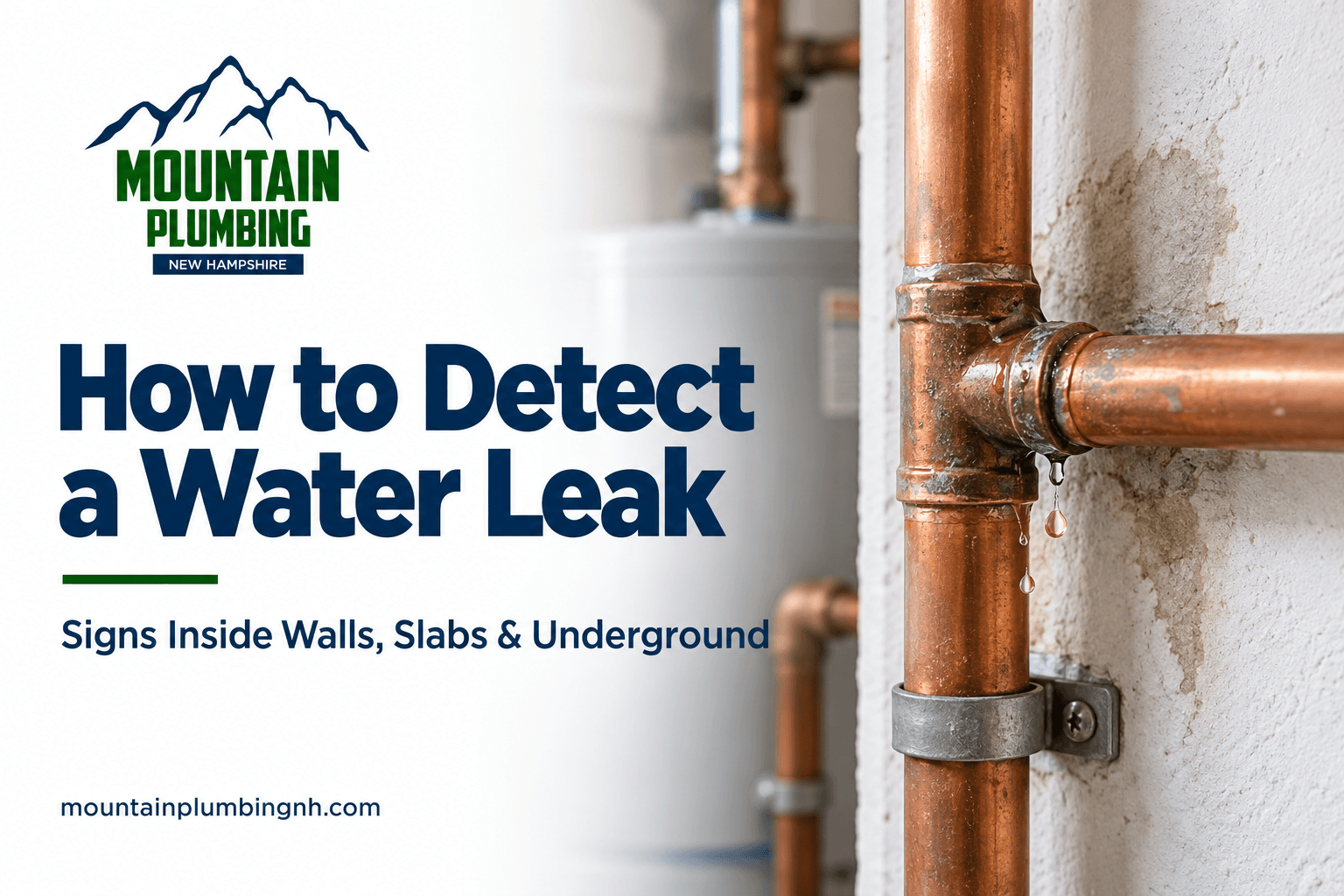
You can detect a water leak by checking for unexplained water bill increases, damp spots, musty smells, mold growth, low water pressure, running water sounds, warm floor areas, wall stains, peeling paint, or water pooling outside.
That is the quick answer.
Some leaks are easy to find. Others hide behind walls, under floors, beneath concrete slabs, or underground. If you suspect a hidden leak, avoid cutting into walls, breaking flooring, or digging without help. A professional can use leak detection tools to locate the issue more safely and accurately.
For homeowners and businesses in New Hampshire, Mountain Plumbing provides water leak detection services to help find hidden plumbing leaks before they cause more damage.
Quick Answer: How to Detect a Water Leak
Here are the most common signs of a hidden water leak:
The EPA notes that household leaks can waste nearly 1 trillion gallons of water annually nationwide, so checking for leaks can protect both your home and your utility costs.
Common Signs of a Hidden Water Leak
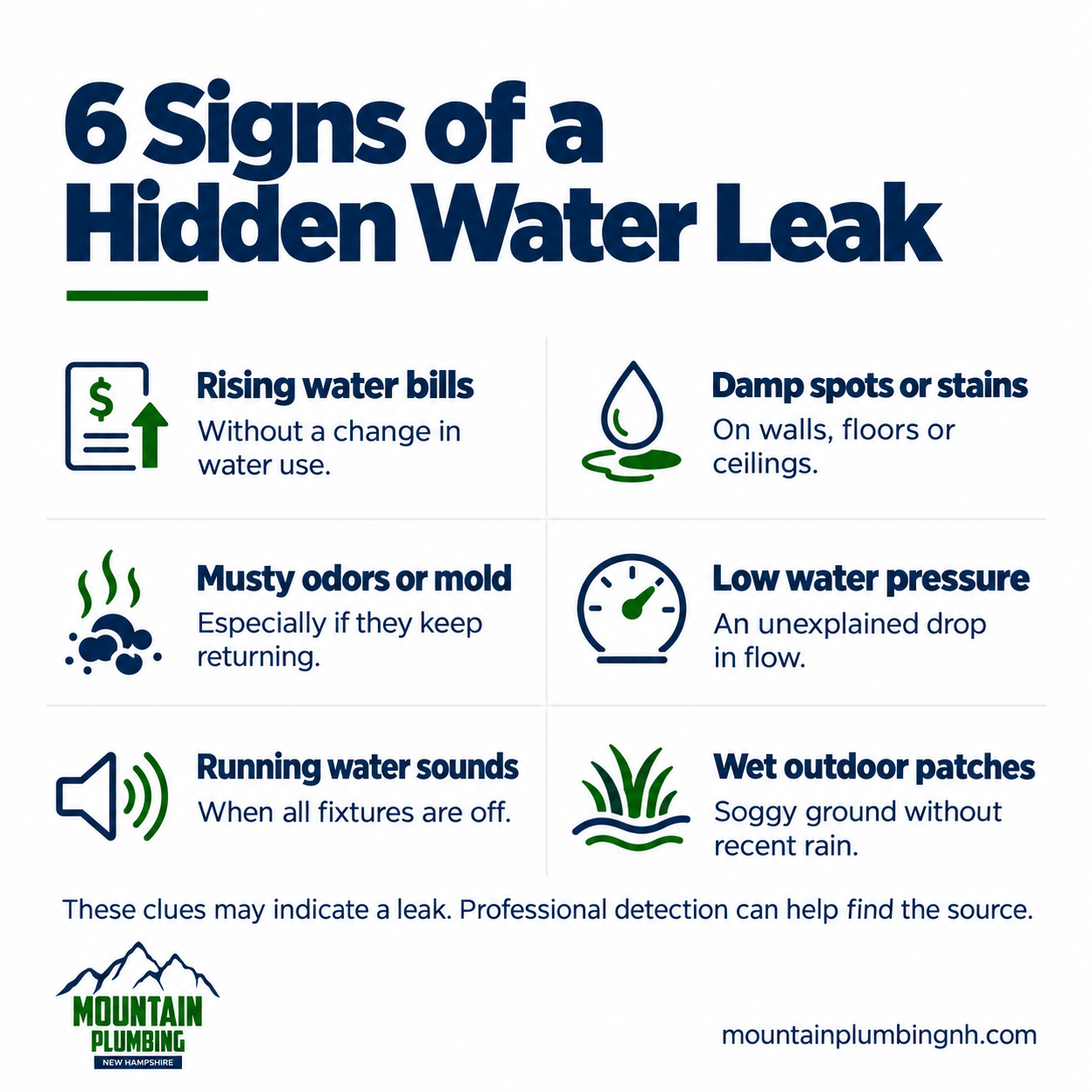
Water leaks are not always dramatic. Many start slowly and stay hidden until damage becomes visible.
Here are the signs to watch for.
Unexplained Water Bill Increase
A sudden jump in your water bill is one of the most common clues.
If your water use has not changed but your bill is higher than usual, water may be leaking somewhere in the plumbing system.
Check for running toilets, dripping faucets, outdoor hose leaks, irrigation issues, and damp areas around the home.
Water Meter Movement
Your water meter can help you spot a leak.
Turn off all faucets, appliances, irrigation systems, and water-using fixtures. Then check the meter. If it continues moving, water may still be running somewhere.
This does not tell you exactly where the leak is, but it can confirm that there may be a problem.
Damp Spots on Walls, Floors, or Ceilings
Damp drywall, stained ceilings, warped floors, or wet baseboards can point to a plumbing leak.
This is especially important if the damp area appears when there has been no rain, spill, or obvious source.
Musty Odors
A musty smell can mean water is trapped somewhere it should not be.
You may notice it near:
- Cabinets
- Bathrooms
- Laundry rooms
- Basements
- Utility rooms
- Behind walls
- Around flooring
- Under sinks
If the smell keeps returning after cleaning, hidden moisture may be the reason.
Mold or Mildew Growth
Mold or mildew can appear when moisture stays in one area for too long.
Small spots around showers are common, but mold appearing on walls, ceilings, baseboards, or near floors may point to a leak.
Do not only clean the surface. Find the moisture source.
Low Water Pressure
Low water pressure can happen for many reasons, but a hidden leak is one possible cause.
Pay attention to whether pressure drops in:
- One faucet
- One bathroom
- The whole home
- Hot water only
- Cold water only
That detail can help narrow down the issue.
Sounds of Running Water
If you hear water running when all fixtures are turned off, it may be a hidden leak.
Listen near:
- Walls
- Floors
- Toilets
- Utility rooms
- Water heaters
- Basements
- Crawl spaces
A hissing, dripping, rushing, or tapping sound can be a clue.
How to Detect a Water Leak in Your House
If you want to know how to detect a water leak in your house, start with a simple room-by-room check.
1. Check Your Water Bill
Compare your current bill to previous months.
A sudden increase without a clear reason may mean water is being wasted somewhere.
2. Inspect Under Sinks
Look under kitchen, bathroom, laundry, and utility sinks.
Check for:
- Drips
- Damp cabinet floors
- Water stains
- Swollen wood
- Musty smells
- Corroded fittings
3. Check Toilets
A running toilet can waste a lot of water.
Listen for water refilling when no one has flushed. You can also look for movement in the bowl when the toilet is not being used.
4. Look Around Appliances
Check around:
- Washing machines
- Dishwashers
- Refrigerators with water lines
- Water heaters
- Boilers
- Humidifiers
- Ice makers
Small appliance supply-line leaks can damage floors and walls if missed.
5. Inspect the Water Heater Area
Water around your water heater may come from the tank, valve, pipe connection, or nearby plumbing.
If you see rust, pooling water, or repeated dampness, schedule service. Mountain Plumbing also provides water heater repair and installation if the leak is connected to your water heater.
6. Check Basements and Crawl Spaces
Basements and crawl spaces often reveal leaks before the main living area does.
Look for wet insulation, damp framing, water stains, puddles, corrosion, or musty smells.
How to Detect Water Leaks in Walls
Water leaks inside walls can be difficult to find because the pipe is hidden behind drywall, plaster, tile, or insulation.
Common signs include:
- Bubbling paint
- Peeling wallpaper
- Soft drywall
- Brown or yellow stains
- Musty odors
- Mold spots
- Warped baseboards
- Damp flooring near the wall
- Dripping sounds
- Cold or wet areas on the wall
If you are trying to detect a water leak inside a wall, do not cut the wall open immediately. First, check nearby fixtures, pipes, bathrooms, kitchens, laundry rooms, and exterior walls.
A wall leak may come from:
- Supply pipe
- Drain pipe
- Shower valve
- Toilet line
- Sink connection
- Roof or siding issue
- Condensation
- Appliance line
If the damp area grows or the smell gets stronger, call a plumber before the damage spreads.
How to Detect Water Leaks Underground
Underground water leaks can happen in buried water lines, service lines, irrigation lines, or pipes running beneath outdoor areas.
Signs of an underground water leak may include:
- Wet patches in the yard
- Soggy soil with no rain
- Areas of unusually green grass
- Water pooling near the foundation
- Lower water pressure
- Higher water bills
- Hissing or running water sounds outside
- Cracks or sinking areas in pavement
- Muddy spots near buried lines
If you are wondering how to detect water leaks underground, start by checking the water meter and outdoor areas. If the meter moves while all water is off, and you cannot find an indoor leak, the issue may be underground.
Avoid digging unless you know where utilities are located. Underground work can involve water lines, gas lines, electrical lines, irrigation lines, and sewer lines.
Mountain Plumbing provides plumbing services in New Hampshire for homes and businesses that need help identifying and fixing plumbing issues safely.
How to Detect a Water Leak Under a Slab
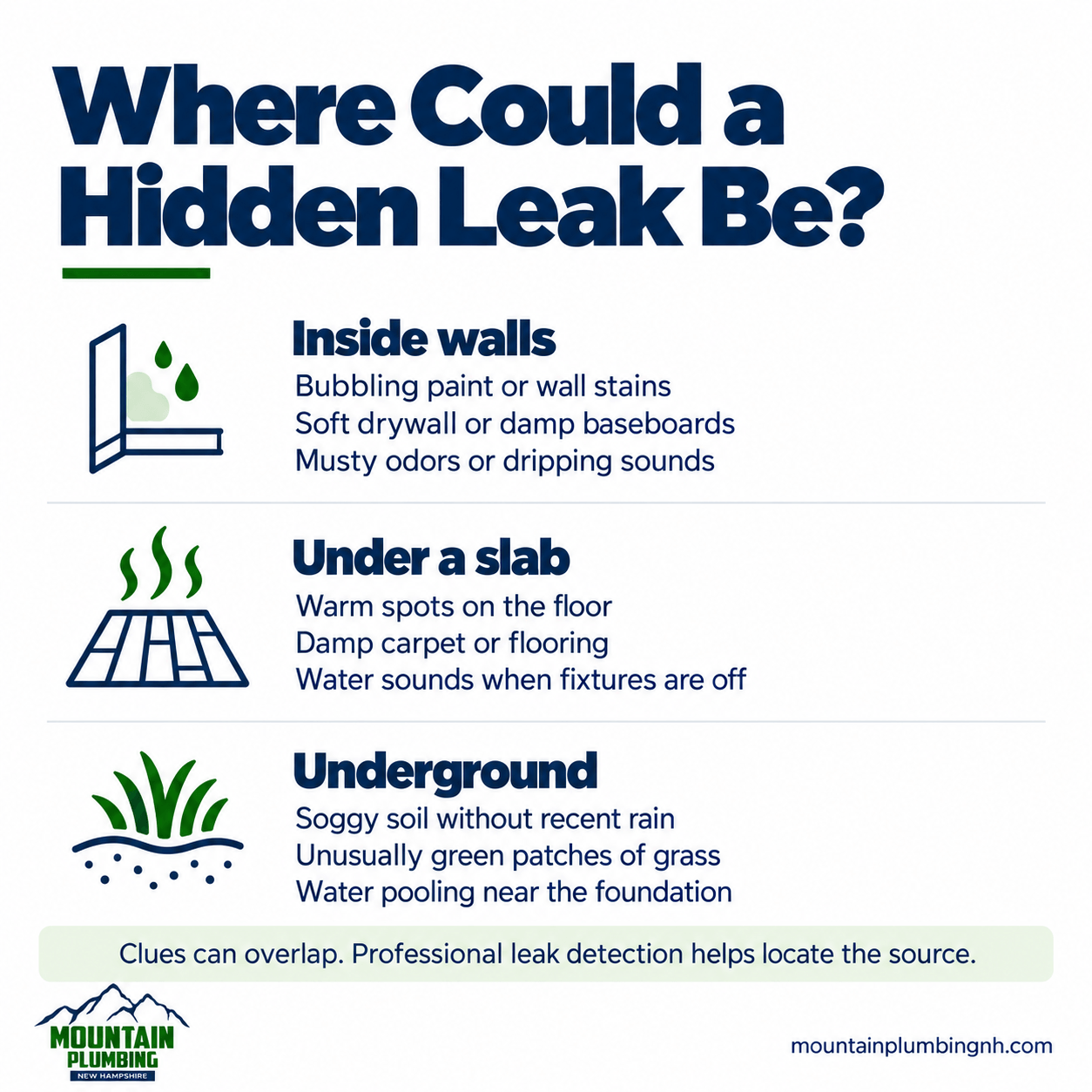
A slab leak happens when a water line beneath a concrete slab or foundation leaks.
Slab leaks can be harder to find because the pipe is under the home. Warning signs may include unexpected water bill increases, damp flooring, warm spots on the floor, low water pressure, and the sound of running water when fixtures are off.
Common signs of a slab leak include:
- Warm spots on the floor
- Damp carpet or flooring
- Water pooling near the foundation
- Mold or mildew smell
- Low water pressure
- Cracks in flooring or walls
- Running water sounds
- Higher water bills
- Uneven flooring
- Hot water running out faster than usual
A warm floor spot can point to a hot water line leak beneath the slab. A damp or soft floor may point to water moving upward through flooring.
Do not ignore slab leak signs. Water beneath a slab can damage flooring, walls, and the foundation area if left untreated.
Water Leak Detection Near Me: When to Call a Professional
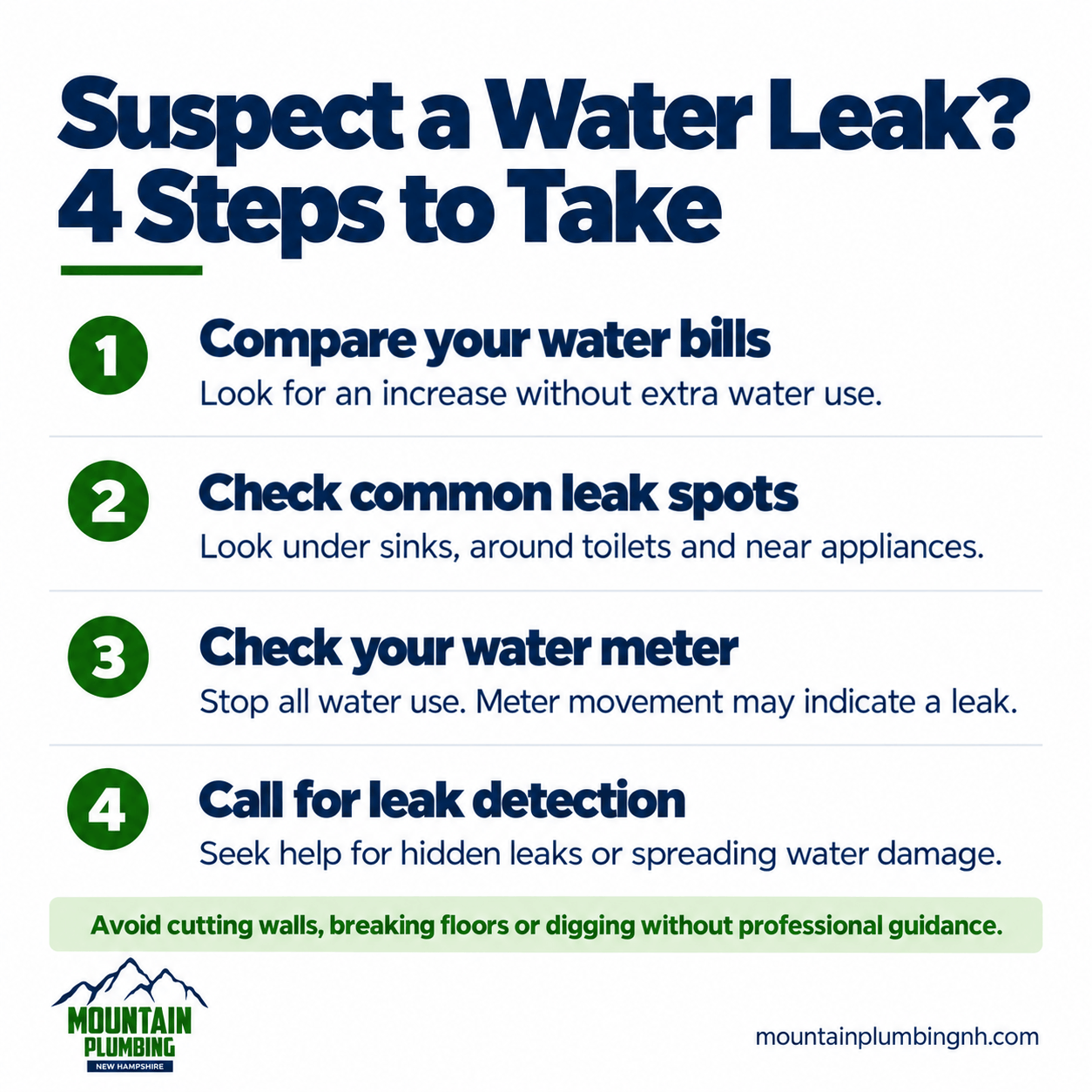
If you are searching for water leak detection near me, you probably already suspect something is wrong.
You should call a professional if:
- Your water bill suddenly increased
- You hear running water when fixtures are off
- There is damp drywall or flooring
- You smell musty odors but cannot find the source
- Mold keeps returning
- Water is pooling outside
- You suspect an underground leak
- You suspect a slab leak
- Water pressure suddenly drops
- A leak is near electrical systems
- You do not know where the leak is coming from
Professional water leak detection can help locate the issue without unnecessary damage. In many cases, a plumber can narrow down the likely source before opening walls, flooring, or outdoor areas.
What Not to Do If You Suspect a Hidden Water Leak
A hidden water leak can make homeowners feel rushed. But guessing can make the problem worse.
Avoid these mistakes.
Do Not Ignore It
Small leaks can cause major damage over time.
Even a slow drip can damage wood, drywall, flooring, insulation, and cabinets.
Do Not Cut Into Walls Too Quickly
Opening walls without knowing the leak source can create unnecessary repairs.
Water may travel before it becomes visible, so the wet spot may not be directly beside the leak.
Do Not Keep Using a Leaking Fixture
If a sink, toilet, appliance, or water heater appears to be leaking, stop using it until the issue is checked.
Do Not Dig Without Checking Utilities
Underground leaks should be handled carefully. Digging without knowing what is below can be dangerous.
Do Not Cover Mold or Water Stains
Painting over stains or cleaning mold without fixing the leak only hides the problem temporarily.
Do Not Wait if Water Damage Is Spreading
If water damage is growing, call for help quickly.
Water can move behind walls, under flooring, and into structural materials.
Common Places Water Leaks Hide
Water leaks often hide in predictable areas.
Check these spots first:
- Under sinks
- Around toilets
- Behind washing machines
- Around dishwashers
- Near refrigerators with water lines
- Around water heaters
- In basements
- In crawl spaces
- Behind showers and tubs
- Near outdoor spigots
- Under slabs
- In underground service lines
- Around boilers or heating equipment
In New Hampshire, seasonal changes can also affect plumbing. Freezing temperatures can increase the risk of pipe damage. If you are dealing with winter-related pipe concerns, Mountain Plumbing also provides support for frozen lines.
How to Prevent Water Leaks
You cannot prevent every leak, but regular checks can lower the risk.
Helpful steps include:
- Check under sinks regularly
- Watch your water bill
- Inspect exposed pipes
- Replace old supply lines
- Keep drains and fixtures in good condition
- Check water heater areas
- Protect pipes from freezing
- Repair small leaks quickly
- Keep outdoor spigots maintained
- Schedule plumbing service when warning signs appear
The Insurance Information Institute recommends paying attention to water seepage, basement moisture, roof drainage, appliance hoses, and plumbing maintenance as part of protecting a home from water damage.
Need Water Leak Detection in New Hampshire?
If you suspect a hidden water leak, Mountain Plumbing can help.
Our team provides water leak detection and plumbing support for homes and businesses across New Hampshire. Whether the leak is inside a wall, under a slab, underground, near a water heater, or somewhere you cannot see, we can help find the source and recommend the right next step.
Contact Mountain Plumbing today to schedule water leak detection.
FAQs About Water Leak Detection
How do I detect a water leak?
Start by checking your water bill, water meter, walls, floors, ceilings, toilets, sinks, appliances, and outdoor areas. Look for damp spots, musty smells, mold, low pressure, running water sounds, or pooling water.
How do I detect a water leak in my house?
Check under sinks, around toilets, near appliances, around your water heater, in basements, crawl spaces, and near walls or floors with stains or dampness.
How do I detect water leaks in walls?
Look for bubbling paint, peeling wallpaper, soft drywall, stains, mold, musty smells, warped baseboards, or dripping sounds. If you suspect a wall leak, call a plumber before cutting into the wall.
How do I detect a water leak inside a wall?
Check both sides of the wall, nearby fixtures, bathrooms, kitchens, laundry areas, and the ceiling or floor around the stain. A plumber can help locate the leak source without unnecessary damage.
How do I detect water leaks underground?
Look for wet soil, soggy grass, pooling water, lower water pressure, or an unexplained water bill increase. If the water meter moves while all water is off, and no indoor leak is visible, the leak may be underground.
How do I detect an underground water leak?
Check the meter, inspect the yard for wet spots, and listen for running water sounds outside. Avoid digging until utilities are located and a professional has inspected the issue.
How do I detect a water leak under a slab?
Watch for warm floor spots, damp flooring, low water pressure, running water sounds, higher bills, cracks, or musty odors. Slab leaks should be inspected professionally.
When should I call for water leak detection near me?
Call a professional when you suspect a hidden leak, cannot find the source, see spreading water damage, smell musty odors, notice mold, or suspect a leak inside a wall, underground, or under a slab.